Separating Quantum Signal from Quantum Noise: A Practical Investor's Guide to the 2024–2025 Landscape
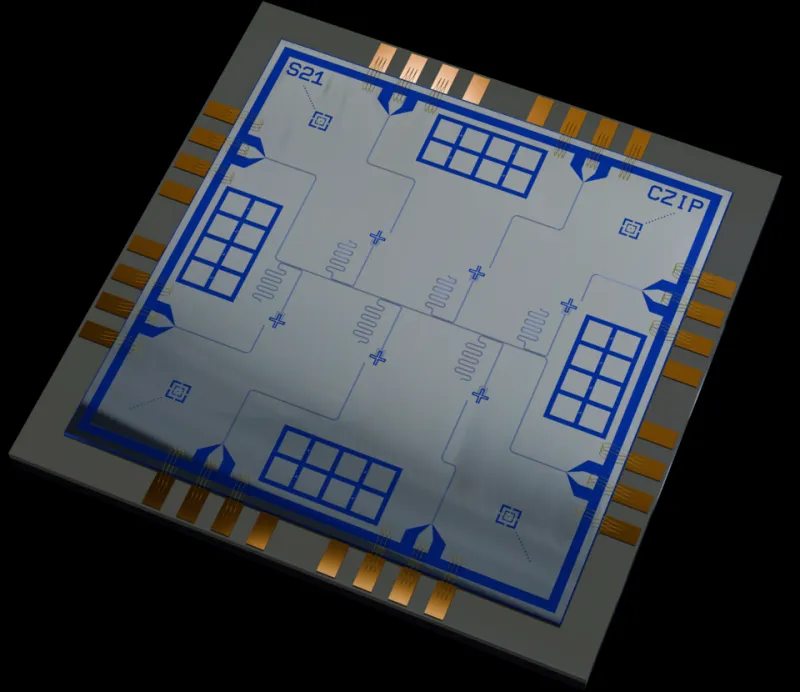
Photo: OJB Quantum, CC BY 4.0, via Wikimedia Commons
Quantum computing occupies a peculiar position in the current technology investment landscape. It is simultaneously one of the most consequential areas of scientific research underway and one of the most aggressively over-marketed. For investors with genuine technical literacy — the audience COSP10 Research Hub is built to serve — the challenge is not finding information about quantum computing. It is filtering the meaningful signals from a continuous stream of carefully engineered noise.
This analysis does not offer investment advice. It offers a decoding framework: a set of specific, technically grounded indicators that distinguish genuine platform maturation from announcement-driven valuation management.
Understanding Why the Noise-to-Signal Ratio Is So High
Before identifying what to watch, it is worth understanding why the quantum computing information environment is so noisy in the first place.
The primary driver is the funding cycle. Quantum computing companies — whether publicly traded entities like IonQ and Rigetti Computing or privately held ventures backed by venture capital — operate in a domain where commercial revenue remains largely pre-material. In the absence of conventional financial metrics, narrative becomes the primary instrument of valuation. Press releases announcing "record-breaking" qubit counts or "unprecedented" gate fidelities serve a financial function as much as an informational one.
A secondary driver is definitional ambiguity. Unlike classical computing benchmarks, which are reasonably standardized, quantum performance metrics remain contested. Two companies can each claim a "1,000-qubit processor" while referring to architectures with radically different practical capabilities. Without a shared measurement standard, every announcement exists in a context that is difficult for non-specialists to evaluate independently.
The result is an information environment in which the loudest signals are frequently the least informative.
The Metrics That Actually Matter
Quantum Volume and Beyond
For several years, IBM's Quantum Volume metric served as a useful single-number summary of a system's practical capability, incorporating qubit count, connectivity, gate fidelity, and circuit depth into a unified score. It remains a reasonable baseline reference. However, as IBM itself has moved toward newer benchmarking frameworks — including its "Circuit Layer Operations Per Second" (CLOPS) metric — investors should recognize that no single number captures the full capability profile of a quantum processor.
The more productive approach is to examine a system's performance across a portfolio of standardized benchmark circuits, particularly those maintained by organizations such as the Quantum Economic Development Consortium (QED-C) in the United States. When a company's performance claims are not accompanied by results on these standardized tests, that absence is itself a signal.
Physical vs. Logical Qubits
This distinction is arguably the most important technical concept for investors to internalize heading into 2025. Physical qubits are the raw hardware components. Logical qubits are error-corrected units that can sustain quantum information long enough to perform computationally meaningful operations.
The ratio between physical and logical qubits required to achieve fault tolerance is enormous under current error correction codes — on the order of hundreds to thousands of physical qubits per logical qubit, depending on the error rate of the underlying hardware. Any company claiming near-term fault-tolerant computation without specifying its logical qubit architecture and the physical-to-logical ratio it has achieved should be approached with considerable skepticism.
Google's 2023 publication in Nature demonstrating that error rates in its surface code implementation decreased as the code distance increased — the first experimental evidence of this theoretically predicted behavior — represented a genuinely significant milestone precisely because it addressed this ratio directly. That is the category of result worth tracking.
Gate Fidelity Trends Over Time
Single announcements of gate fidelity improvements are less informative than the trajectory of fidelity improvements over 18-to-24-month periods. A platform that has improved two-qubit gate fidelity from 99.0% to 99.5% over two years is demonstrating a fundamentally different engineering trajectory than one that has remained static at 99.0% despite repeated press releases about architectural upgrades.
Publicly available data from cloud-accessible quantum systems — IBM Quantum, Amazon Braket, and Microsoft Azure Quantum all provide some degree of hardware characterization data — can be used to construct these trajectories independently of company communications.
What to Watch in Peer-Reviewed Literature
For technically sophisticated investors, the peer-reviewed publication record provides a noise-filtered view of genuine progress. Several journals and preprint venues are particularly worth monitoring.
Nature and Nature Physics remain the most selective venues for experimental quantum computing results. Publication in these journals does not guarantee commercial relevance, but it does indicate that the underlying claims have survived rigorous peer review. Physical Review X and PRX Quantum (published by the American Physical Society) offer similarly high editorial standards at greater publication volume.
The arXiv preprint server (arxiv.org), while not peer-reviewed, provides early access to results from leading academic and industrial research groups. Monitoring the quant-ph and cond-mat.supr-con sections for contributions from groups at MIT Lincoln Laboratory, Caltech, the University of Maryland's Joint Quantum Institute, and the national laboratories — including Argonne, Oak Ridge, and Sandia — provides a reasonable window into the frontier of US quantum research.
A useful heuristic: if a company's press release announces a breakthrough that does not have a corresponding preprint or peer-reviewed publication within 60–90 days, treat the announcement as preliminary at best.
Platform-Specific Signals for 2024–2025
Without endorsing any specific investment position, several platform-level developments merit attention over the next 12–18 months.
For superconducting qubit platforms (IBM, Google, Rigetti), the relevant signal is progress toward below-threshold error correction — specifically, whether logical error rates continue to decrease as physical qubit arrays scale. IBM's Heron processor family and its stated roadmap toward a 100,000-physical-qubit system represent testable commitments that will either be met or not.
For trapped-ion platforms (IonQ, Quantinuum), the signal is gate fidelity at scale. Trapped-ion systems have historically demonstrated superior fidelity on small qubit counts; the open question is whether that fidelity advantage persists as ion chain lengths and shuttling complexity increase.
For photonic and neutral-atom platforms (PsiQuantum, QuEra, Atom Computing), the signal is first demonstrations of programmable entanglement at qubit counts exceeding 1,000 with error rates approaching the fault-tolerance threshold. These platforms remain earlier in their development trajectories, making their near-term publication record particularly informative.
The Signal Framework, Summarized
For investors seeking to allocate attention efficiently in an information-saturated environment, the following hierarchy provides a practical starting point:
Prioritize peer-reviewed results over press releases. Prioritize logical qubit demonstrations over physical qubit counts. Prioritize multi-year performance trajectories over point-in-time announcements. Prioritize standardized benchmark results over proprietary metrics. And prioritize independent verification — through cloud-accessible hardware characterization or third-party academic testing — over company-supplied data.
Quantum computing will, in all likelihood, represent one of the defining technological transitions of the coming decades. The companies and platforms that survive to capture that transition will be those that demonstrate consistent, verifiable, technically coherent progress — not those that generate the most noise in the interim.
At COSP10 Research Hub, our commitment is to help technically literate audiences decode exactly that distinction. The signal is out there. Finding it requires knowing where — and how — to look.