Zero Output, Full Draw: The Hidden Economics of Idle Power Consumption in Enterprise Data Centers
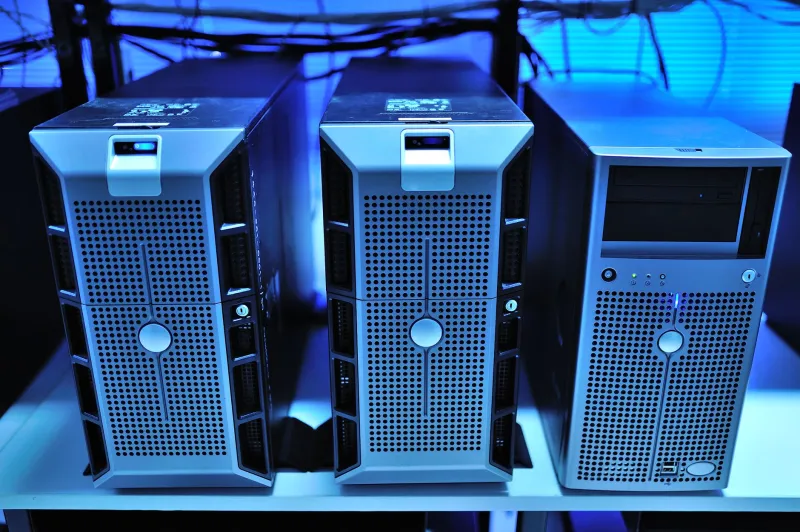
In the discipline of computing, signal-to-noise ratio is a foundational concept — the proportion of meaningful output relative to background interference. Apply that framework to enterprise power consumption, and a troubling picture emerges. Across thousands of data centers operating throughout the United States, a substantial fraction of total electricity draw produces no usable compute signal whatsoever. It is pure noise on the power grid, and it is costing the industry billions annually.
This is not a marginal inefficiency. It is a structural failure embedded in how enterprises plan, provision, and account for infrastructure at scale.
The Accounting Blind Spot
Most enterprise infrastructure teams track power consumption at the facility level — total kilowatt-hours delivered to the building, aggregate PUE (Power Usage Effectiveness) ratios, and quarterly utility invoices. These metrics are useful for benchmarking against industry standards, but they obscure a critical dimension of waste: the power consumed by individual systems that are technically operational but functionally dormant.
A server sitting in a provisioned rack, awaiting a workload that never materializes, does not draw zero watts. Depending on configuration, an idle enterprise server typically consumes between 30 and 60 percent of its peak load — sometimes more, when memory DIMMs, network interface cards, and storage controllers are factored in. Multiply that baseline draw across thousands of underutilized nodes, and the aggregate waste becomes structurally significant.
Storage arrays present a particularly acute version of this problem. Enterprise SAN and NAS systems are engineered for high availability, which means their controllers, cache modules, and drive spindles remain energized continuously — regardless of whether any application is actively reading or writing data. A storage array supporting a decommissioned application may sit idle for months before anyone notices, all while drawing several hundred watts per hour from the facility's power budget.
Cooling as a Multiplier
The idle power problem does not stop at the compute layer. Every watt consumed by an idle server or storage system generates heat, and that heat must be actively removed. Cooling infrastructure — computer room air conditioning units, in-row coolers, chilled water systems — does not distinguish between productive and unproductive heat loads. It simply responds to ambient thermal conditions.
This creates a compounding effect. An idle server drawing 200 watts does not cost the organization 200 watts of capacity. When cooling overhead is factored in through the facility's PUE, the effective power cost may be 280 to 320 watts or higher, depending on the efficiency of the cooling plant. At scale, this multiplier transforms a manageable inefficiency into a material budget line item.
A mid-sized enterprise operating 10,000 server nodes at even 20 percent average idle draw — a conservative estimate — may be sustaining a phantom load equivalent to 2,000 fully active servers. At current US commercial electricity rates, that translates to millions of dollars in annual expenditure that generates zero revenue, zero compute throughput, and zero business value.
What Telemetry Is Revealing
The emergence of granular power telemetry — enabled by intelligent PDUs, baseboard management controllers, and modern data center infrastructure management platforms — has given operations teams an unprecedented view into per-device consumption patterns. The findings, in many cases, have been genuinely alarming.
One large financial services firm operating multiple US data centers deployed DCIM tooling across its server estate and, within 90 days, identified over 1,400 servers consuming power with zero CPU utilization recorded over a rolling 30-day window. The annualized power cost of that idle fleet exceeded $4 million. The servers had not been decommissioned following application migrations; they had simply been forgotten.
A major retail organization conducting a similar audit discovered that nearly 18 percent of its storage capacity — measured in both physical footprint and power draw — was allocated to datasets with no active access patterns in over 12 months. The power cost of maintaining that storage in a hot, always-available state was estimated at $2.3 million annually, exclusive of the cooling overhead it generated.
These are not anomalies. Infrastructure research consistently indicates that average server utilization rates in enterprise data centers hover between 12 and 18 percent. The implication is stark: the majority of provisioned compute infrastructure is, at any given moment, consuming power without producing meaningful output.
The Environmental Signal
Beyond the financial dimension, idle power consumption carries an environmental cost that is increasingly material to enterprise sustainability commitments. US data centers collectively consume an estimated 70 to 90 billion kilowatt-hours of electricity annually, a figure that continues to grow as AI workloads and cloud-adjacent infrastructure expand. Phantom loads embedded within that total represent a meaningful fraction of avoidable carbon emissions.
For organizations operating under SEC climate disclosure requirements or voluntary ESG frameworks, idle power is no longer merely an operational inefficiency — it is a reportable liability. The inability to accurately characterize productive versus unproductive energy consumption undermines the credibility of any emissions reduction claim.
Structural Remediation
Addressing the phantom load problem requires intervention at multiple layers of infrastructure governance. Power-aware provisioning policies — which link server allocation to demonstrated workload demand rather than anticipated peak capacity — represent the most direct lever. Automated workload consolidation, driven by real-time utilization signals, can migrate active processes onto fewer physical nodes while placing underutilized hardware into low-power states.
Storage tiering strategies, which migrate infrequently accessed data from high-availability flash or spinning disk arrays to lower-power archival systems, offer substantial savings with minimal operational disruption. Modern object storage platforms designed for cold-tier workloads can reduce per-gigabyte power consumption by an order of magnitude compared to enterprise SAN infrastructure.
Perhaps most critically, organizations need to establish power telemetry as a first-class operational signal — one that is monitored with the same rigor applied to CPU utilization, network throughput, and storage IOPS. Without visibility into per-device idle draw, idle infrastructure remains effectively invisible to financial and operational planning processes.
Decoding the Waste Signal
The phantom load problem is, at its core, an information problem. Data centers generate enormous volumes of operational telemetry, yet the specific signal that would reveal the cost of doing nothing — idle power draw correlated with workload absence — has historically been filtered out of operational dashboards and financial models alike.
As infrastructure teams develop more sophisticated instrumentation and as power costs continue to rise across US electricity markets, that signal is becoming impossible to ignore. The organizations that learn to decode it earliest will carry a meaningful cost advantage over those still accounting for electricity as an undifferentiated facility expense.
In computing, noise that goes undetected long enough eventually gets mistaken for the baseline. The phantom load problem demonstrates what happens when that confusion persists at enterprise scale: the waste becomes structural, the costs become normalized, and the signal that something is fundamentally wrong gets lost in the aggregate.