Where the Model Ends and the Mirage Begins: Diagnosing Transfer Failure in Machine Learning Systems
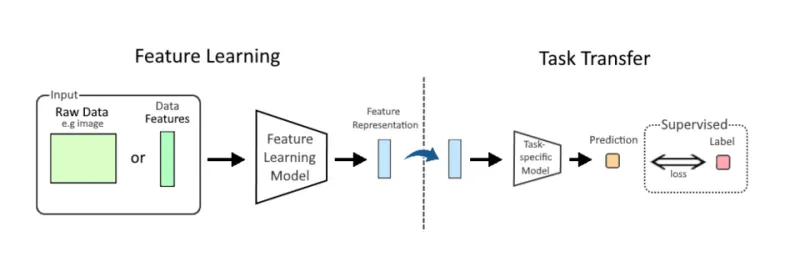
Photo: Fgpacini, CC BY-SA 4.0, via Wikimedia Commons
There is a particular category of failure in machine learning that does not announce itself through obvious error rates or broken pipelines. It arrives quietly, dressed in reasonable-looking outputs, until someone with sufficient domain expertise notices that the model is producing answers that are technically coherent and substantively wrong. This is transfer failure—and understanding its mechanical origins is one of the more important diagnostic challenges in applied ML engineering.
The problem is not that models fail to generalize. It is that they fail in ways that are difficult to distinguish from success until the failure has already propagated through a production system.
The Transfer Learning Promise and Its Structural Limits
Transfer learning rests on a legitimate and well-supported principle: representations learned in one domain often encode features that are useful in adjacent domains. A model trained on a large corpus of general English text has internalized syntactic structures, semantic relationships, and contextual patterns that transfer meaningfully to downstream tasks—sentiment analysis, named entity recognition, document classification—without requiring the downstream task to be trained from scratch.
This works. It works well enough that it has become the foundational paradigm for most modern NLP and computer vision deployments. The issue arises when practitioners extend the assumption beyond its valid range—when they treat domain-adjacent as equivalent to domain-identical, or when they interpret benchmark performance as evidence of generalizable capability rather than evidence of fit to a specific evaluation distribution.
The benchmark is not the world. It is a sampled representation of the world, constructed under specific conditions, at a specific time, by specific annotators operating under specific assumptions. A model that achieves high performance on that benchmark has learned to decode that particular signal. Whether it can decode a structurally similar signal from a different source is a separate empirical question—one that the benchmark score cannot answer.
Signal Degradation Across Distributional Boundaries
In signal processing terms, transfer failure is a form of channel mismatch. The model was trained to decode signals transmitted through one channel—with its characteristic noise profile, encoding conventions, and frequency distribution. When the deployment channel differs, the decoding apparatus produces errors that are not random but systematic, shaped by the gap between the assumed channel and the actual one.
Consider a concrete instance. A clinical NLP model trained on electronic health records from large academic medical centers in the northeastern United States will have internalized the documentation conventions, abbreviation patterns, and clinical vocabulary of that specific institutional context. When deployed against records from community hospitals in rural Appalachia—records generated by different practitioners, under different workflow pressures, using different shorthand conventions—the model encounters a channel it was not calibrated for.
The semantic content may be structurally similar. The distributional properties of the text are not. The model's performance degrades not because it has lost its underlying language capability, but because the features it learned to rely on are no longer reliable signals in the new context. It is decoding the right type of transmission with the wrong codebook.
Separating Capability from Artifact
This is the central diagnostic challenge in transfer failure analysis: determining which components of a model's performance reflect genuine learned capability and which reflect domain-specific statistical artifacts that do not travel.
A useful framework begins with feature attribution. Before deploying a model in a new domain, practitioners should examine which input features are most influential in the model's predictions. If high-importance features are domain-specific in ways that will not hold in the target environment—particular formatting conventions, vocabulary distributions skewed by the training corpus, structural patterns unique to the source domain—those features are artifacts, not capabilities. The model's performance in the source domain is partially or substantially dependent on signals that will not be present, or will be present in different form, in the target.
This analysis is distinct from standard validation. Validation tells you how the model performs on a held-out sample from the same distribution. Feature attribution analysis tells you why it performs that way—and whether those reasons are portable.
A second diagnostic axis involves behavioral consistency testing. A model with genuine capability should produce stable predictions when semantically equivalent inputs are presented in different surface forms. Paraphrase testing, template variation, and cross-format evaluation can reveal whether a model is responding to meaning or to surface statistics. Models that exhibit high sensitivity to superficial variation—predictions that shift substantially when sentence structure is altered without semantic change—are demonstrating statistical mimicry rather than learned understanding.
The Contextual Gap Problem
Beyond feature distribution, transfer failure frequently originates in what might be called the contextual gap: the difference between the implicit assumptions embedded in the training data and the explicit conditions of the deployment environment.
Every dataset carries assumptions. The ImageNet benchmark encodes assumptions about image composition, lighting conditions, and object representation conventions that reflect the specific process by which the dataset was assembled. A model trained on ImageNet has learned to perform well under those assumptions. When those assumptions are violated—as they routinely are in industrial inspection, satellite imagery analysis, or medical imaging—performance degrades in proportion to the degree of violation.
The contextual gap is particularly difficult to close because it is rarely explicit. Practitioners know what the training data contains. They often do not know what assumptions the training data implicitly enforces—assumptions about what constitutes a normal example, what the range of variation looks like, what the relationship between input features and labels is expected to be. These assumptions are embedded in the data generation process, not in the model architecture or the training procedure, and they do not appear in any documentation.
Practical mitigation requires deliberate effort to surface these assumptions before deployment. Domain expert review of training data—not to evaluate label accuracy, but to identify what the data presupposes about the deployment environment—is an underutilized diagnostic step that can prevent significant post-deployment failure.
A Framework for Locating the Boundary
For engineering teams managing model deployment across multiple domains, the following diagnostic sequence provides a structured approach to identifying where genuine model capability terminates.
First, establish a distributional profile of both the training and target domains across all major feature dimensions. Statistical distance metrics—Jensen-Shannon divergence, Maximum Mean Discrepancy—can quantify the magnitude of distributional shift before deployment.
Second, conduct targeted ablation studies in the source domain, systematically removing features that are unlikely to be present in the target domain and measuring the performance impact. Features whose removal causes disproportionate performance degradation are domain-specific dependencies, not transferable capabilities.
Third, construct a small, carefully labeled evaluation set from the target domain and evaluate performance before full deployment. This set should be assembled with domain expert involvement and should deliberately include edge cases that differ from source domain conventions.
Finally, instrument deployed models to track prediction confidence distributions over time. Systematic drift in confidence distributions—particularly unexpected increases in high-confidence predictions—is an early indicator that the model is operating outside its calibrated range and may be producing outputs that appear authoritative but are not.
The model's performance on its training domain is a starting point for analysis, not a guarantee of deployment readiness. The gap between those two things is where transfer failure lives—and closing it requires understanding not just what the model learned, but under what conditions that learning holds.