Poisoned at the Source: How Label Errors and Annotator Bias Corrupt Machine Learning Pipelines End to End
Photo: Dvd8719, CC BY-SA 4.0, via Wikimedia Commons
The Signal Before the Model
In machine learning engineering, the dominant conversation about model quality centers on architecture decisions, training compute, and evaluation benchmarks. These are legitimate concerns. They are also downstream of a problem that receives comparatively little attention: the quality of the signal that enters the pipeline before a single gradient update is computed.
Label quality is not a preprocessing concern to be addressed once and forgotten. It is a structural property of the training corpus that propagates forward through every subsequent stage of model development. A model trained on corrupted labels does not learn corrupted facts—it learns to reproduce corrupted patterns with the same statistical confidence it would apply to clean ones. The architecture cannot distinguish between signal and noise at the label level. That distinction has to be made by humans, and humans are the source of the problem.
Where Annotation Goes Wrong
The dominant mechanism for producing labeled training data at scale in the US market is crowdsourced annotation—platforms like Amazon Mechanical Turk, Scale AI, and Appen that distribute labeling tasks across large pools of workers paid per-task. The economics of this model create systematic pressure against quality. Workers compensated at piece rates optimize for throughput. Complex annotation tasks that require sustained attention or domain expertise are completed quickly, with shortcuts that introduce errors the task design did not anticipate.
Research published by teams at MIT and Google has consistently found that crowdsourced label error rates for standard benchmark datasets are substantially higher than the datasets' official documentation acknowledges. A 2021 study examining ten widely-used image classification datasets found that several contained label error rates exceeding 5 percent—a figure that sounds modest until one considers that models trained on these datasets are regularly evaluated against test sets drawn from the same corrupted distribution. The benchmark score is measuring performance on corrupted data against a corrupted reference, producing a number that looks like accuracy but is measuring something else entirely.
Beyond random errors, annotation introduces systematic bias through the subjective judgments annotators make when task instructions are ambiguous. Sentiment classification tasks ask workers to determine whether a piece of text is "positive," "negative," or "neutral"—categories that carry different meanings depending on the cultural context, professional background, and personal history of the person applying them. When annotator pools are demographically narrow, as they frequently are in platforms dominated by US and Indian workers, the resulting labels encode the collective judgment of that specific population and present it as ground truth.
Compounding Through the Pipeline
The compounding effect of label corruption becomes visible when one traces a specific error type through a complete ML pipeline.
Consider an object detection model trained to identify medical imaging features. A crowdsourced labeling task produces bounding box annotations for a structure that appears differently depending on imaging angle and patient anatomy. Annotators without medical training—a common situation when task budgets do not support specialist labor—apply inconsistent labels to ambiguous cases, systematically under-labeling certain presentations and over-labeling others. This inconsistency is not random. It clusters around specific visual characteristics that non-experts find confusing.
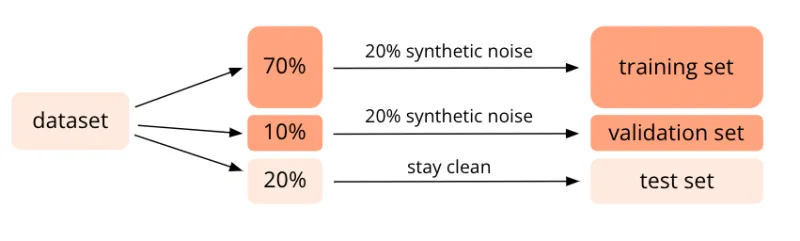
Data augmentation, the next stage, takes these labels and generates additional training examples by applying transformations—rotation, contrast adjustment, synthetic noise—to existing annotated samples. The augmentation preserves the original labels. Every augmented copy of a mislabeled example is also mislabeled. The pipeline has now multiplied the error rather than diluting it.
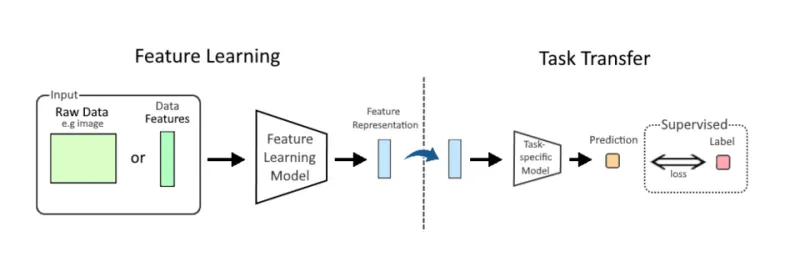
Fine-tuning on a domain-specific dataset inherits the corrupted representations from the pre-trained base model and, if the fine-tuning data contains its own annotation errors, compounds them with a second layer of corruption. The resulting model has been optimized to minimize loss on a training objective that does not correspond to the actual task it is being deployed to perform.
At inference time, this model produces confident predictions—high softmax probabilities, low uncertainty estimates—because confidence is a function of the model's internal consistency, not of the accuracy of the labels it was trained on. The model has learned to be sure. It has not learned to be right.
Detecting Where the Signal Degraded
Isolating label corruption in production ML systems requires instrumentation at each stage of the pipeline, not just at the model output. Several practical frameworks have emerged from research and industry practice.
Confident Learning is a technique developed by researchers at MIT that uses a model's own predictions to estimate label error rates in training data. By examining cases where a model trained on the full dataset assigns high probability to a class different from the recorded label, the method identifies likely mislabeled examples without requiring a second annotation pass. This approach has been applied to standard benchmark datasets and has revealed error rates that substantially change the interpretation of published benchmark results.
Annotator agreement analysis provides a complementary signal. When multiple annotators label the same example and disagree, the disagreement is itself information. Platforms that collapse inter-annotator disagreement into a single majority-vote label discard this information. Preserving it—and treating high-disagreement examples as structurally uncertain rather than definitively labeled—allows downstream models to express calibrated uncertainty rather than false confidence.
Slice-based evaluation, popularized by the Stanford Snorkel project and subsequently adopted in various forms across industry, involves evaluating model performance not only on aggregate test set metrics but on specific, semantically coherent subsets of the data. A model that performs well overall but performs poorly on a specific demographic group, geographic region, or image condition is exhibiting a pattern consistent with systematic label corruption or representation gaps in training data. Aggregate metrics obscure this; slice analysis surfaces it.
The Fine-Tuning Amplification Problem
The emergence of large pre-trained foundation models has not solved the label quality problem. It has, in some respects, made it more consequential. When a foundation model is fine-tuned on a small, task-specific dataset, that dataset exercises an outsized influence on the model's behavior in the fine-tuned domain. A corrupted fine-tuning dataset of 10,000 examples can substantially degrade the performance of a foundation model that was pre-trained on hundreds of billions of tokens—because fine-tuning updates are applied specifically to the parameters that govern the target task.
This dynamic is particularly relevant in enterprise AI deployments, where organizations fine-tune commercial foundation models on proprietary data that has not been subjected to the same scrutiny as public benchmark datasets. The fine-tuning data is often assembled from internal records, customer interactions, or domain-specific documents that carry their own historical biases—hiring decisions, customer service transcripts, clinical notes—and may have been labeled by subject matter experts whose expertise does not extend to annotation methodology.
Engineering for Signal Integrity
The practical implication for ML engineering teams is that label quality cannot be treated as a one-time data cleaning task. It requires ongoing instrumentation, explicit quality contracts with annotation vendors, and evaluation frameworks that distinguish between model failure and data failure.
At minimum, production ML pipelines should maintain separate tracking of training data provenance, annotation methodology, and inter-annotator agreement statistics—not as documentation artifacts but as live signals that inform retraining decisions. When a model's performance degrades in production, the diagnostic question is not only "what changed in the model" but "what changed in the data that trained it."
The machine learning supply chain is a signal chain. Every stage introduces the possibility of corruption, and corruption that enters early amplifies through every subsequent transformation. Decoding where the signal actually broke is the prerequisite for building systems that produce predictions worth trusting.