The Hidden Throughput Penalty: How Microsecond Latency Is Reshaping the Economics of Modern Infrastructure
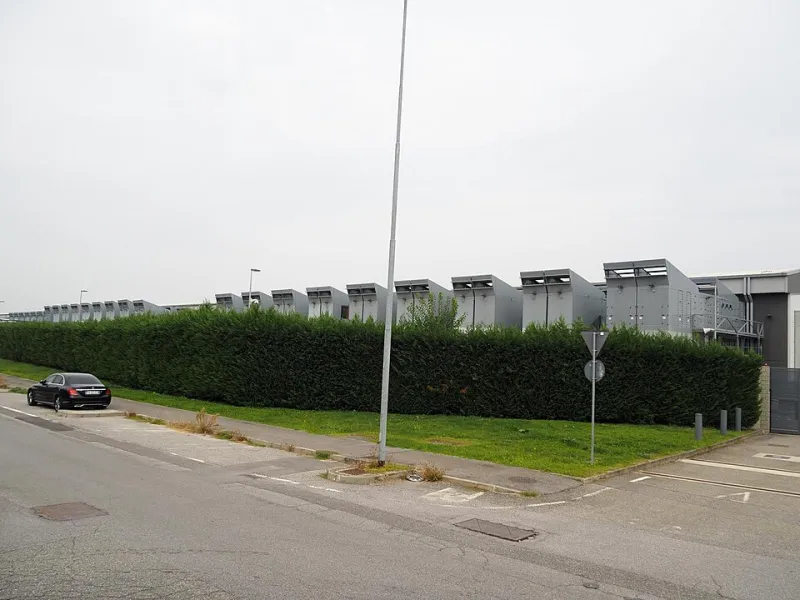
Photo: Lapalmauz, CC BY-SA 4.0, via Wikimedia Commons
In computing systems, timing is not merely a performance metric — it is a signal. Every microsecond of unaccounted delay carries information about inefficiency, architectural compromise, or infrastructure debt. At COSP10 Research Hub, we treat latency not as an abstract benchmark but as a diagnostic instrument: a means of decoding where systems are genuinely constrained versus where engineers are chasing noise.
The premise of this analysis is straightforward. Sub-millisecond latency has ceased to be the exclusive concern of high-frequency trading desks and supercomputing clusters. It has permeated cloud service agreements, autonomous systems, real-time AI inference pipelines, and content delivery networks that serve hundreds of millions of American users. Understanding where this "throughput penalty" extracts real cost — and where it does not — is increasingly a prerequisite for sound infrastructure investment.
Latency as a Cost Signal, Not Just a Performance Metric
The conventional framing of latency optimization positions it as a purely technical problem: reduce round-trip time, improve throughput, tune kernel parameters. This framing is incomplete. In practice, latency functions as an economic signal embedded within infrastructure architecture.
Consider the following: Amazon Web Services published internal research indicating that every 100 milliseconds of additional load time correlated with a 1% reduction in revenue. Google has reported similar figures for Search. These are not marginal rounding errors — at the scale of US digital commerce, they represent billions of dollars annually. The implication is that latency carries a tax, one that compounds across distributed systems in ways that are rarely visible in standard monitoring dashboards.
The challenge for infrastructure engineers and technology strategists is that this tax is not uniformly distributed. It concentrates in specific architectural layers and specific industry verticals. Identifying those concentrations is where the real analytical work begins.
Financial Trading: Where Nanoseconds Have Dollar Values
No sector has invested more aggressively in latency reduction than electronic financial trading. The arms race among high-frequency trading firms operating on US exchanges — NYSE, NASDAQ, CBOE — has produced some of the most technically extreme infrastructure decisions in commercial computing history.
Firms have co-located servers inside exchange data centers in New Jersey and Chicago to eliminate even the propagation delay introduced by geographic distance. Microwave relay networks have been constructed between Chicago and New York specifically because microwave signals travel faster through air than fiber-optic signals travel through glass. The latency advantage gained: approximately 4 milliseconds. The infrastructure investment: tens of millions of dollars.
This is not irrational. In arbitrage strategies where a position must be executed before a competing algorithm detects and responds to the same market signal, 4 milliseconds is the difference between capturing the spread and missing it entirely. The economic value of that window is calculable, and in sufficiently liquid markets, it justifies the capital expenditure.
However, this dynamic does not generalize. For the vast majority of institutional trading strategies — those operating on timeframes measured in seconds or minutes — the marginal gain from sub-millisecond optimization is statistically indistinguishable from zero. Engineers working outside the narrow band of latency-sensitive arbitrage strategies are frequently misdirected by the mythology of speed into optimizations that yield no measurable business outcome.
Autonomous Vehicles: When Latency Becomes a Safety Variable
The autonomous vehicle sector reframes latency in terms that transcend economics: in vehicle control systems, propagation delay is a safety parameter. The sensor fusion pipelines aboard a self-driving platform — integrating inputs from LiDAR, radar, cameras, and ultrasonic sensors — must resolve object detection, trajectory prediction, and actuation commands within windows measured in tens of milliseconds.
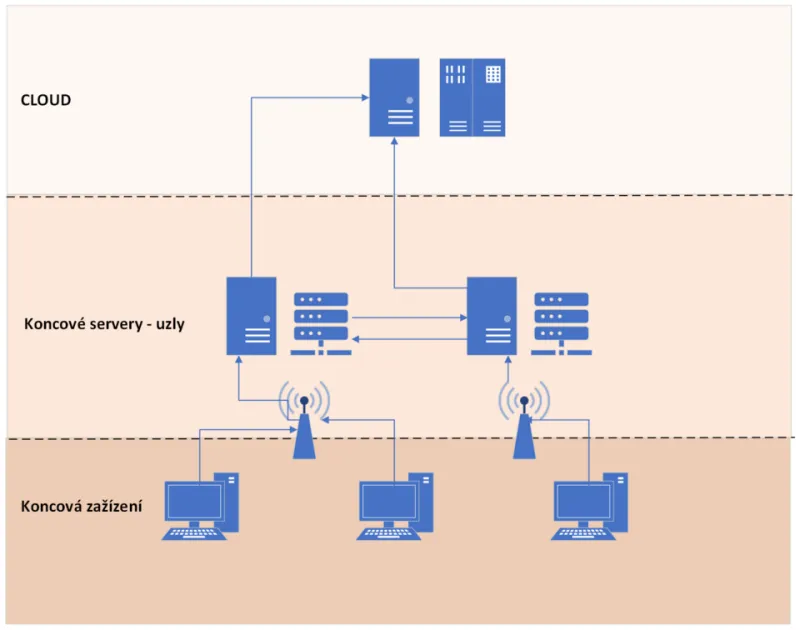
At highway speeds, a 50-millisecond processing delay translates to approximately 3.5 feet of uncontrolled vehicle travel. This is the latency tax expressed in physical distance. Companies such as Waymo, Cruise, and the autonomous trucking platforms operating across US freight corridors have invested heavily in edge compute architectures specifically to keep inference pipelines local to the vehicle, avoiding the round-trip latency of cloud-dependent processing.
The engineering constraint here is not merely bandwidth — it is determinism. Autonomous systems require not just low average latency but bounded worst-case latency. A system that achieves 10-millisecond average processing time but occasionally spikes to 200 milliseconds is functionally unsafe. This distinction between mean latency and tail latency is one of the most underappreciated fault lines in modern infrastructure design.
Cloud Services: The Latency-Cost Tradeoff in Distributed Systems
For cloud-native applications serving American consumers, the latency equation operates differently than in trading or autonomous systems. Here, the relevant unit is not the microsecond but the user-perceived response time — typically the range between 100 and 300 milliseconds where human perception begins to register delay as friction.
The architectural decisions that govern this range — CDN placement, database read replica topology, caching layer design, API gateway configuration — are well-understood. What is less frequently examined is the cost of over-optimization in this space. Engineering teams at mid-market SaaS companies routinely invest in latency reduction efforts targeting improvements from, say, 180 milliseconds to 160 milliseconds. For most user populations and most application contexts, this delta is perceptually invisible and commercially irrelevant.
The signal-to-noise problem in cloud latency optimization is real. Profiling tools surface dozens of potential optimization targets; not all of them carry equal economic weight. Prioritization frameworks that weight latency improvements by user-facing impact — rather than raw millisecond reduction — consistently produce better ROI than undifferentiated speed-chasing.
Where Engineers Waste Resources: The Diminishing Returns Threshold
Decoding the latency signal requires recognizing when it stops carrying meaningful information. Several patterns consistently indicate that further optimization has crossed into diminishing returns territory.
First, when the latency bottleneck resides outside the engineering team's control — in third-party API dependencies, in the physical distance between a US East Coast data center and a West Coast user, in last-mile ISP variability — internal optimization efforts are largely futile. Second, when user research indicates that current response times fall below the perceptual threshold for the relevant interaction type, additional speed improvements produce no measurable change in engagement or conversion metrics. Third, when optimization costs in engineering time and infrastructure complexity exceed projected revenue impact over a 12-month horizon, the investment case simply does not close.
The discipline of latency engineering, properly practiced, is as much about knowing where to stop as it is about knowing where to push.
Conclusion: Reading the Latency Signal Accurately
The microsecond has become a unit of economic and operational consequence across a widening range of American technology infrastructure. But like any signal, its meaning depends on context. In high-frequency trading, nanoseconds carry genuine dollar values. In autonomous vehicle systems, milliseconds carry safety implications. In cloud services, the relevant threshold is human perception — and the noise floor sits surprisingly close to where many optimization efforts currently operate.
The infrastructure teams and technology strategists who will make the most defensible decisions in the years ahead are those who treat latency as a diagnostic signal to be interpreted rather than a metric to be minimized at any cost. Decoding that signal accurately — understanding when delay represents a genuine bottleneck versus acceptable system behavior — is the engineering challenge that separates high-performing architectures from expensive ones.