When Clocks Lie: The Physics and Consequences of Timing Failures in Distributed Infrastructure
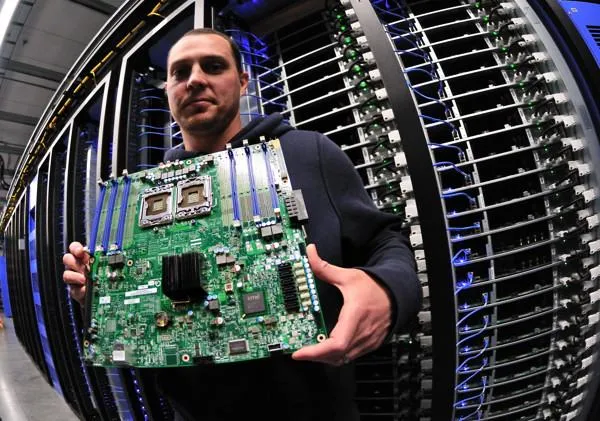
Photo: Intel Free Press, CC BY 2.0, via Wikimedia Commons
The Invisible Assumption Holding Everything Together
Every distributed system in production today rests on a premise so fundamental that most engineers never consciously articulate it: that all participating nodes share a sufficiently consistent view of time. Transaction ordering, consensus protocols, cache invalidation, log correlation, authentication token expiry — each of these depends on clocks that agree, at least approximately, on what moment it currently is.
When that agreement breaks down, the consequences can range from subtle data corruption to complete system unavailability. And unlike most infrastructure failures, timing problems are extraordinarily difficult to observe in real time, nearly impossible to reproduce deterministically, and capable of remaining dormant for extended periods before triggering catastrophic cascades.
Decoding this class of failure is precisely the kind of problem that COSP10's research focus exists to address. Timing in distributed systems is, at its core, a signal problem — the question of how accurately a time reference can be transmitted, maintained, and synchronized across physical distance and competing system loads.
Clock Skew and Clock Drift: A Necessary Distinction
Practitioners often use these terms interchangeably, but the distinction carries significant engineering implications.
Clock skew refers to a fixed offset between two clocks at a given moment. If server A believes it is 14:00:00.000 UTC and server B believes it is 14:00:00.050 UTC, the skew between them is 50 milliseconds. Skew is a snapshot measurement — it describes a difference in position on the time axis at a specific instant.
Clock drift, by contrast, is a rate problem. It describes how quickly a clock's error accumulates over time relative to a reference standard. Quartz oscillators, which underpin the timekeeping hardware in virtually all commodity server hardware, drift at rates that typically range from 1 to 200 parts per million. At 100 ppm, a clock that is perfectly synchronized at noon will have accumulated approximately 8.6 seconds of error by the following day, absent any correction mechanism.
This distinction matters because the two phenomena require different interventions. Skew can be corrected with a single synchronization event. Drift requires continuous, ongoing correction — which is precisely what protocols like NTP (Network Time Protocol) and PTP (Precision Time Protocol) are designed to provide. When those correction mechanisms fail, drift compounds silently until the accumulated error crosses a threshold that the system cannot tolerate.
Historical Failures and What They Teach
The infrastructure industry has accumulated a body of painful case studies around timing failures, though organizations are often reluctant to publish detailed post-mortems.
One of the most instructive publicly documented examples occurred during an Amazon Web Services outage in 2012, where an improperly handled clock correction contributed to cascading failures across Elastic Load Balancing infrastructure in the US-East-1 region. The correction event — a necessary adjustment to bring drifted clocks back into alignment — was processed in a way that momentarily created apparent time discontinuities, which upstream systems interpreted as error conditions. The result was a feedback loop that took hours to fully resolve.
The Chubby lock service developed at Google, described in a seminal 2006 paper by Mike Burrows, was designed in part because the engineers building it recognized that distributed consensus was fundamentally a time-dependent problem. Without reliable clock synchronization, it becomes impossible to determine whether a lease has genuinely expired or whether a node's clock is simply wrong.
More recently, the financial sector has encountered timing failures with direct regulatory consequences. The SEC's Consolidated Audit Trail requirements mandate timestamp accuracy within 50 milliseconds for certain trade reporting obligations. Firms that discover their internal timestamp infrastructure has been drifting outside that envelope face both compliance exposure and the technical challenge of reconstructing accurate event sequences from logs that were generated by disagreeing clocks.
The Physics of Synchronization Across Data Centers
Achieving tight clock synchronization is a fundamentally physical problem before it is a software one. Light travels approximately 186 miles per millisecond in a vacuum — and somewhat slower through fiber optic cable, where the effective propagation speed is roughly two-thirds of that. A round-trip synchronization message between a server in Virginia and a time reference in California will incur at minimum several milliseconds of propagation delay, regardless of how well the software is implemented.
NTP, the protocol most commonly deployed for clock synchronization in enterprise environments, achieves typical accuracy of 1 to 50 milliseconds on public internet paths, and 0.1 to 10 milliseconds on well-managed local area networks. For many applications, this is adequate. For distributed databases implementing strict serializability, financial trading systems, or telecommunications infrastructure, it frequently is not.
PTP (IEEE 1588), when deployed with hardware timestamping support, can achieve synchronization accuracy in the sub-microsecond range on local networks. Google's TrueTime API, which underpins the Spanner globally distributed database, uses a combination of GPS receivers and atomic clocks co-located in data centers to bound clock uncertainty to single-digit milliseconds globally — and then builds its consistency model around explicit acknowledgment of that uncertainty interval rather than pretending it does not exist.
This last approach — designing systems that reason explicitly about clock uncertainty rather than assuming synchronization is perfect — represents a significant architectural maturity that most organizations have not yet reached.
Detection Strategies That Teams Consistently Miss
The monitoring stacks deployed by most engineering teams are well-instrumented for latency, error rates, and resource utilization. They are poorly instrumented for clock health.
The following detection strategies address gaps that appear repeatedly in infrastructure post-mortems.
Continuous skew monitoring between nodes. Rather than relying solely on each node's NTP synchronization status, implement direct peer-to-peer clock comparison between critical system components. A node can report healthy NTP synchronization while still exhibiting significant skew relative to its peers if the NTP reference itself has drifted.
Timestamp monotonicity validation in log pipelines. When log aggregation systems receive events with timestamps that travel backward in time or exhibit large, discontinuous jumps, this is a reliable indicator of clock problems on the originating host. Instrumenting log ingestion to flag these anomalies provides early warning before application-level failures occur.
Lease and timeout sensitivity analysis. Identify every component in your system that relies on time-bounded leases, token expiry windows, or timeout thresholds. For each, calculate the minimum clock skew that would cause the component to malfunction. This analysis frequently reveals that systems assumed to tolerate modest clock error are actually sensitive to skew levels well within the range that NTP alone cannot guarantee.
Alerting on NTP stratum degradation. When a server's NTP client falls back to a higher stratum reference — or loses synchronization entirely — the change is often logged but not alerted upon. Treating stratum degradation as a production alert, rather than an informational event, provides response time before drift accumulates to problematic levels.
Mitigation at the Architecture Level
Detection addresses the symptom. Durable mitigation requires architectural choices that reduce the system's dependence on clock accuracy as a correctness guarantee.
Hybrid logical clocks, popularized in distributed systems research and implemented in databases such as CockroachDB, combine physical timestamps with logical counters to preserve event ordering guarantees even when physical clocks disagree. Vector clocks achieve similar goals through different mechanisms and remain valuable in systems where causal ordering is the primary concern.
For organizations operating multi-region infrastructure on AWS, Google Cloud, or Azure, each provider offers PTP-capable time synchronization services that deliver substantially better accuracy than public NTP pools. Amazon Time Sync Service, for instance, provides access to a fleet of atomic reference clocks with sub-millisecond accuracy targets within AWS regions. Adopting these services is a low-friction intervention that many teams defer without clear reason.
Ultimately, the teams that manage distributed systems most reliably are those that have internalized a simple principle: time in a distributed system is not a fact. It is an estimate, bounded by uncertainty, that must be treated with the same engineering rigor applied to any other approximation. When the clocks lie — and given sufficient operational lifetime, they will — the systems that survive are those designed with that eventuality already accounted for.